Playa del Carmen
The most practical base on the Riviera Maya
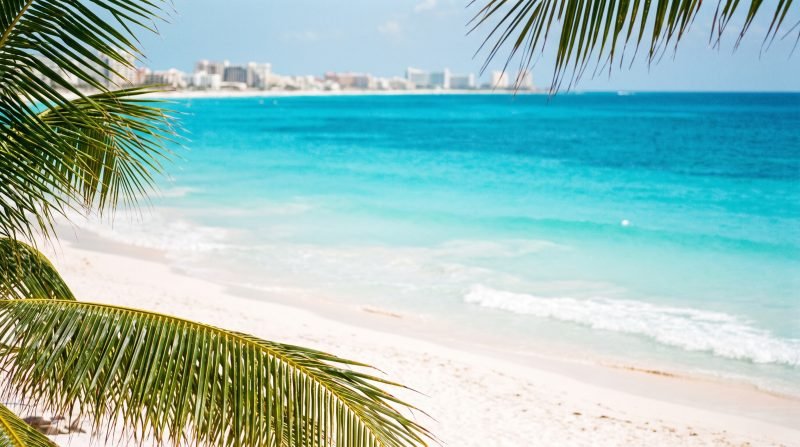
Playa del Carmen is the middle ground of the Riviera Maya: it has the Caribbean beach, it has a walkable town and it does not have Cancún's size or traffic. It went from fishing village to one of Mexico's fastest-growing cities, and it is now the most practical base for exploring the whole Quintana Roo coast.
Fifth Avenue and everything else
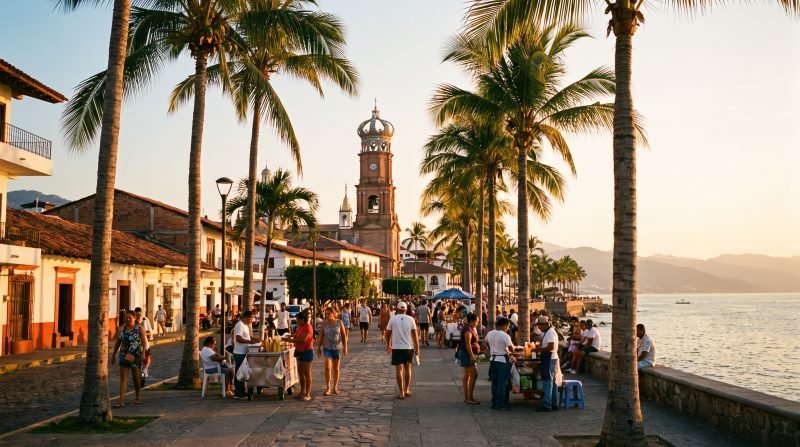
Quinta Avenida is the pedestrian street running parallel to the sea that defines the destination: forty blocks of restaurants, shops, bars and touts. It is fun and exhausting in equal measure. The trick regulars use is simple: the Quinta north of Calle 20 is far more pleasant and less aggressive than the tourist stretch downtown.
Off the Quinta, Playa has ordinary neighbourhoods where people live, with markets, cheap kitchens and prices unlike the promenade's. Walking three streets inland changes the cost of your trip completely.
The beaches
- Punta Esmeralda — north of town, where a cenote empties into the sea. The local favourite and the best for families.
- Playa Fundadores — central, by the park and the Portal Maya sculpture.
- Playa 88 — quieter and wider, toward the north.
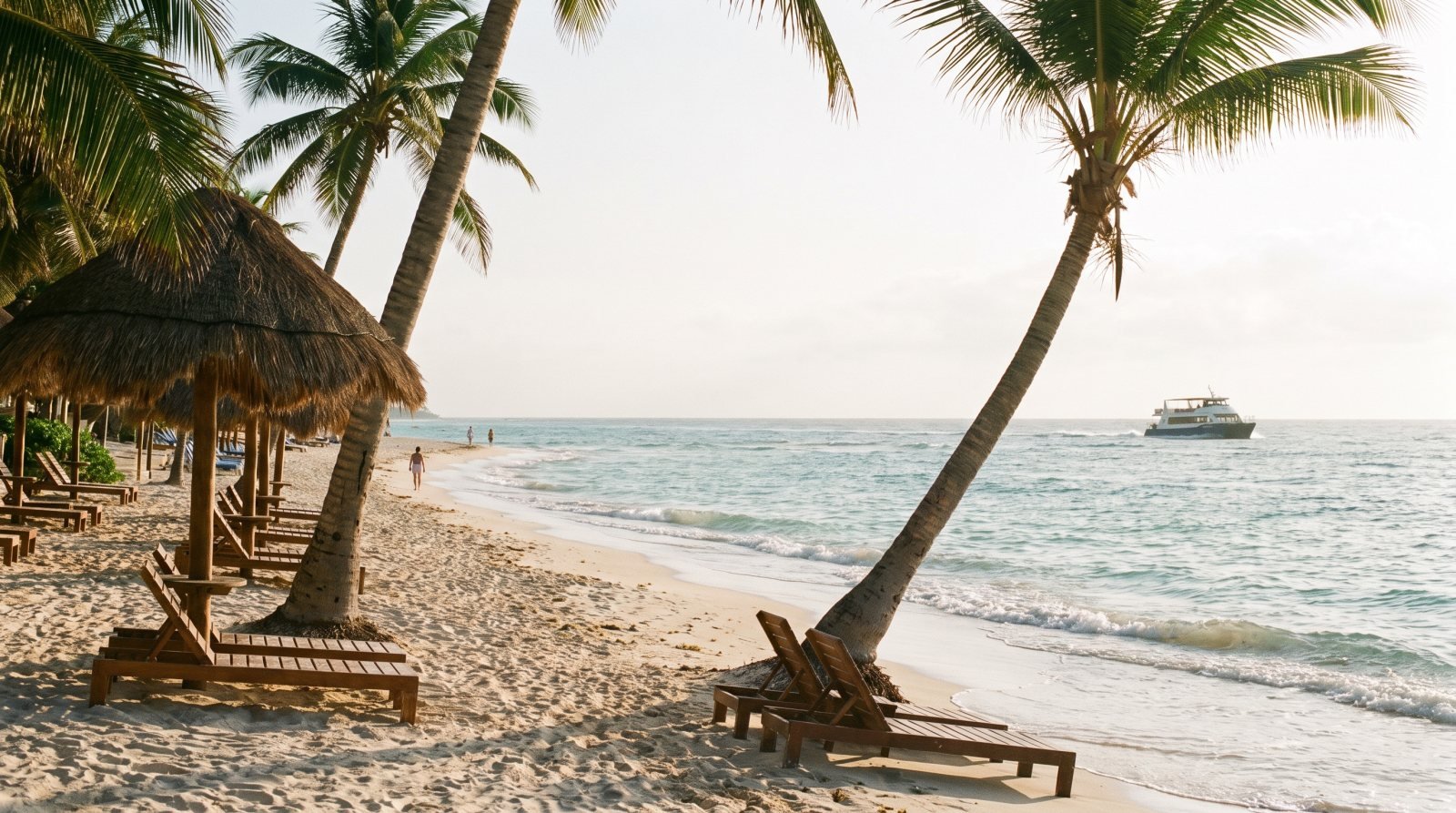
- Playacar — south, the residential and resort zone, with wide sand and fewer people.
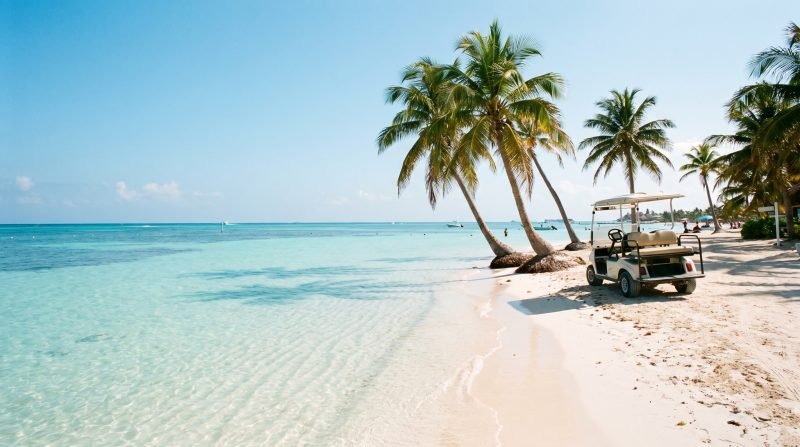
- Xpu-Há and Paamul — half an hour south, open beaches far calmer than the urban ones.
The cenotes, which are the real reason
The Yucatán peninsula has no surface rivers: all the fresh water runs underground, and cenotes are the entrances to that system. There are dozens around Playa, from the touristed ones with staircases and life jackets to open pools in the middle of the jungle. Cristalino, Azul, Jardín del Edén and the Dos Ojos system are all within half an hour. It is the most distinctive experience in this part of Mexico and nothing on the Pacific coast resembles it.
Day trips from here
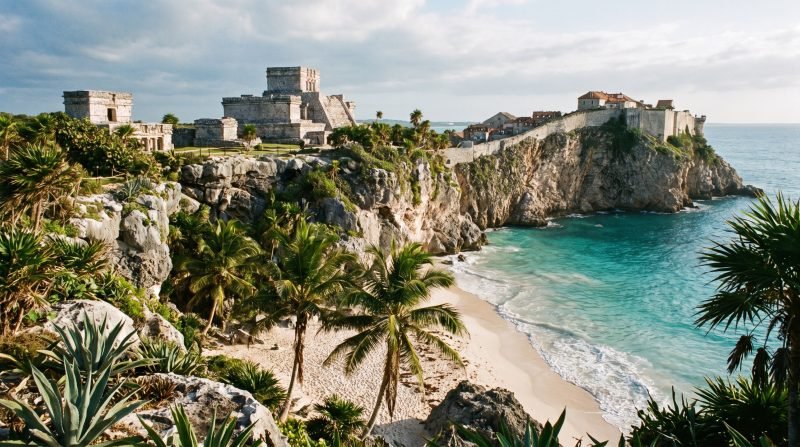
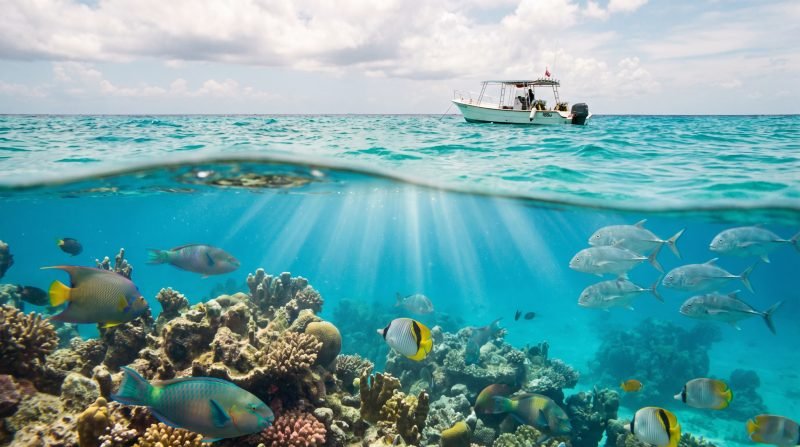
Playa is well placed for everything: Cozumel is forty minutes by ferry from the downtown pier; Tulum is an hour south; Chichén Itzá and Valladolid are two and a half hours inland; the Sian Ka'an reserve and Akumal, where sea turtles graze the seagrass. Based in Playa you can fill a week without repeating a plan.
When to come
Same as the rest of the Mexican Caribbean: December to April is dry and sunny, with the best mix of weather and clean water. June to November is hurricane season and humid. Sargassum shows up mostly between April and August, varying a lot by year; the beaches north of town usually receive less than those to the south.
Getting there and around
You arrive through Cancún airport (CUN), about 50 minutes up the highway, by shared shuttle, direct ADO bus or rental car. Tulum airport (TQO) is another gateway, a little over an hour to the south. In town you walk; along the coast, colectivo vans run the federal highway and cost almost nothing.
Where to stay
Downtown (calles 10 to 20) to be walking distance from everything, if noise does not bother you. North (calle 30 and up) for calm and better local restaurants. Playacar for a resort and quiet with wide sand. And for a real village, Puerto Morelos to the north or Akumal to the south.
One piece of advice
Rent a car for one day and drive the federal highway south, stopping at cenotes and coves. It is cheap, easy to drive and the best way to see the Riviera Maya without being tied to tour schedules. Leave early: the prettiest cenotes fill up from eleven onward.